YEAR
2022
COMPANY
Barker and Stonehouse
ROLE
UX Lead
Strategy
Leadership
Architecture
Optimisation
Collaboration
Growth
COMPANY TYPE
Luxury furniture retailer
SUMMARY
Led the end-to-end UX strategy and redesign of a legacy e-commerce platform, aligning user needs with business goals to deliver a scalable, high-performing digital experience.
TEAM
UX, UI, Product, Engineering, External Agencies
PLATFORM
Web

💡 Overview
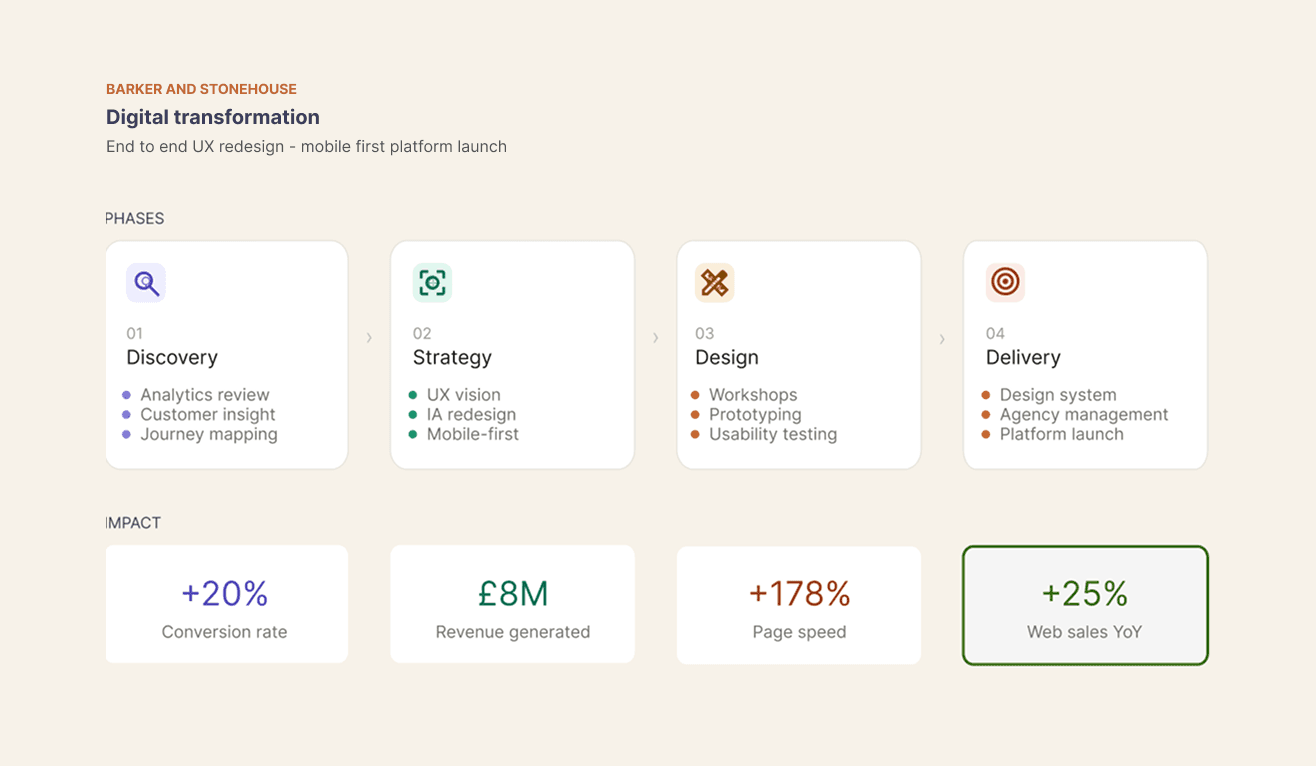
A ground-up UX-led redesign of a legacy e-commerce platform to create a scalable, mobile-first experience that reduced friction, improved product discoverability, and drove measurable growth across conversion and revenue.
Results:
Delivered a 25% increase in web sales
20% uplift in conversion
>£8M+ additional revenue
178% improvement in site speed
78% increase on key category sales
Saved £150K through data optimisation
The challenge
Problem
The existing platform was outdated, slow, and difficult to navigate. With 90% of traffic coming from mobile, poor performance and fragmented journeys were impacting product discovery, checkout, and overall conversion.
Goal
The goal was to define and deliver a scalable e-commerce experience that improved product discoverability, reduced friction across key journeys, enhanced performance, and drove measurable increases in engagement, conversion, and revenue.
My Role
As UX Lead, I defined the experience vision and led a multidisciplinary team across UX, UI, product, and engineering, managing multiple third-party partners and aligning stakeholders around a clear strategy to deliver a cohesive, user-centred solution.
Strategy and approach
Used analytics and behavioural data to identify performance gaps across acquisition, conversion, and retention.

Understand users and pain points
Synthesised insights from session recordings, journey mapping, and stakeholder input to identify friction in navigation, product discovery, and checkout.

Restructed information architecture
Redefined site structure using SEO, search, and sales data to improve product discoverability and create a clearer, scalable navigation system.

Simplify product experience
Reduced product complexity by prioritising top-performing configurations, improving decision-making and reducing cognitive load.
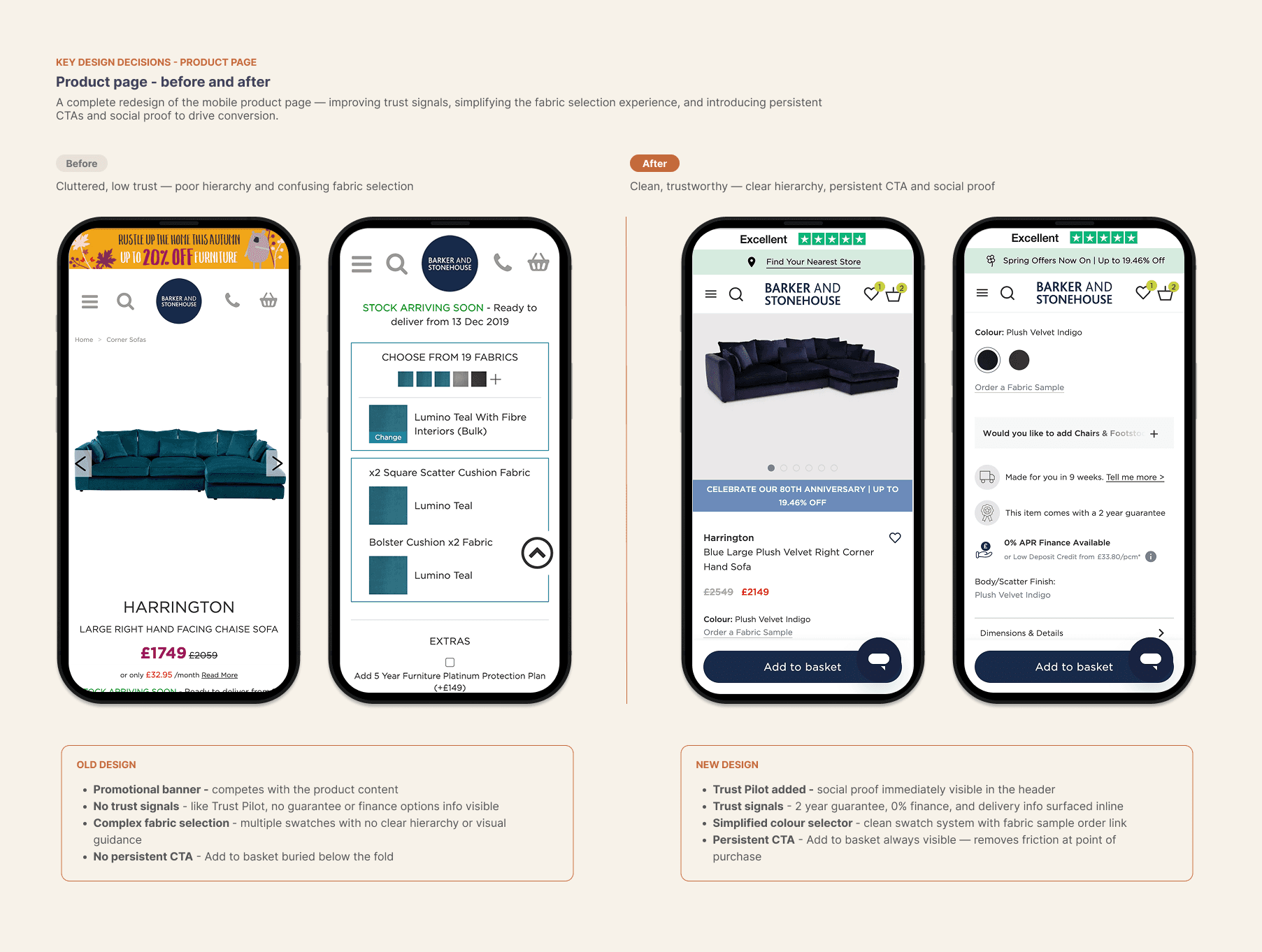
Align teams through workshops
Led cross-functional workshops with internal teams and third-party partners to align on priorities and co-create solutions.


Design, iterate and validate
Delivered low to high-fidelity designs, validated through usability testing to ensure alignment with user and business needs.

Key Decisions
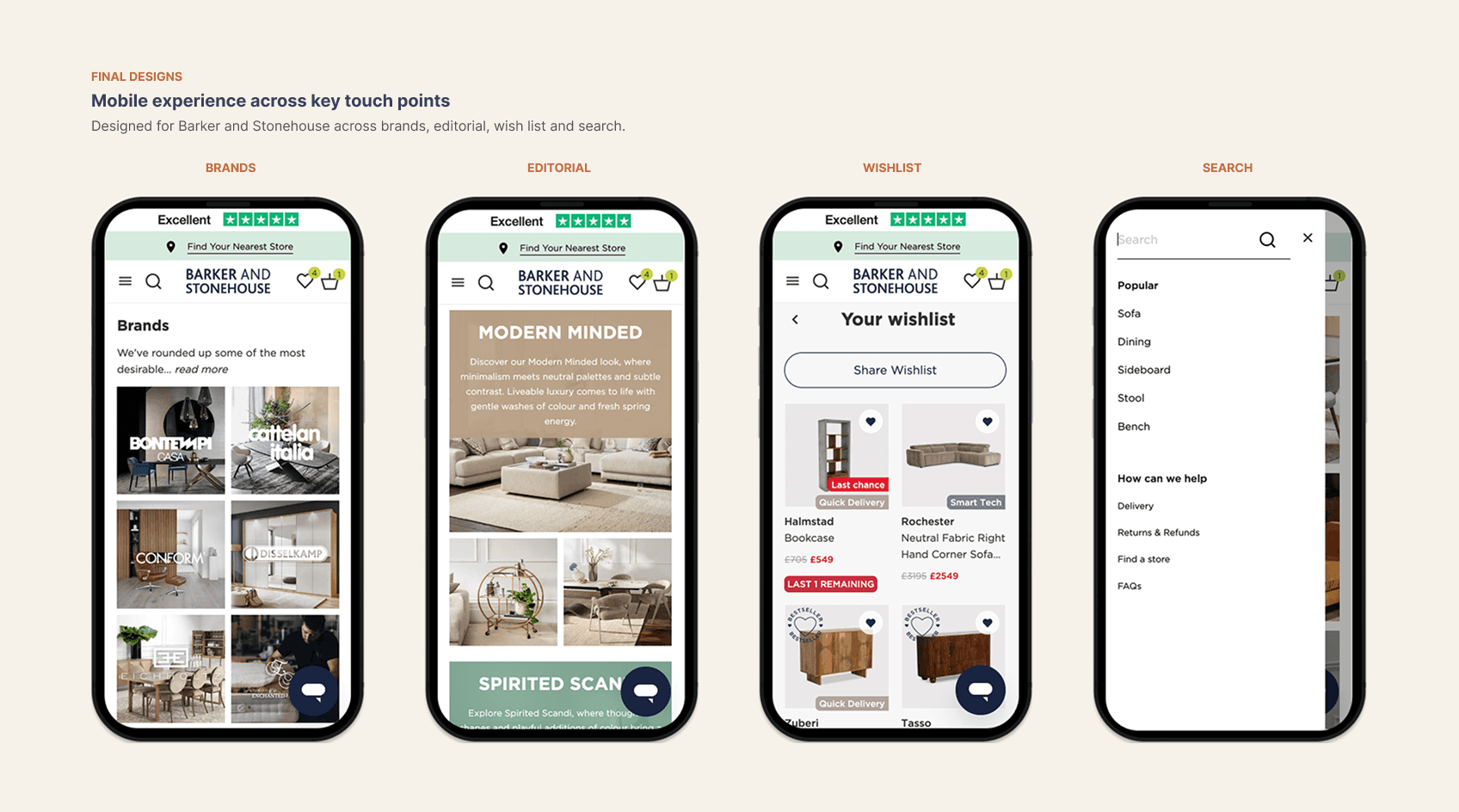
Mobile-first redesign
Prioritised mobile journeys based on 90% traffic share
Simplified checkout
Reduced friction and improved completion rates
Reduced product complexity
Limited options to best-performing configurations
Improved product discoverability
Restructured navigation, filtering, and categorisation
Data-led optimisation
Used analytics and conversion trends to guide decisions
Outcome
Delivered a scalable, high-performing e-commerce platform that significantly improved customer experience and commercial performance, while establishing UX as a strategic capability within the organisation.